

Consistent, predictable performance
Less variation, fewer surprises, and stronger delivery.
Service 04
Control ensures improvement and operational performance sticks, and remains on track long after change activity is complete.
Why Control matters
Many organisations deliver improvement and then slowly lose it.
This is not a failure of intent or effort. It is a lack of control mechanisms that protect progress.
Control creates calm, predictable performance that leaders can rely on.
Performance drifts as:
What you get
The page copy stays grounded in what leaders can see, align on, and sustain rather than abstract methodology.
Less variation, fewer surprises, and stronger delivery.
Clear routines that keep focus on what matters most.
Improvement that continues without reliance on external support.
Included
Each stage is broken into focused workstreams so the service read feels concrete and commercially legible.
Design and embed the leadership systems that keep performance under control and reinforce improvement.
Reapply the Fluere benchmark tool to measure progress, validate what has embedded, and reset priorities objectively.
Keep continuous improvement firmly on the leadership agenda through a change leadership group or embedded board-level review.
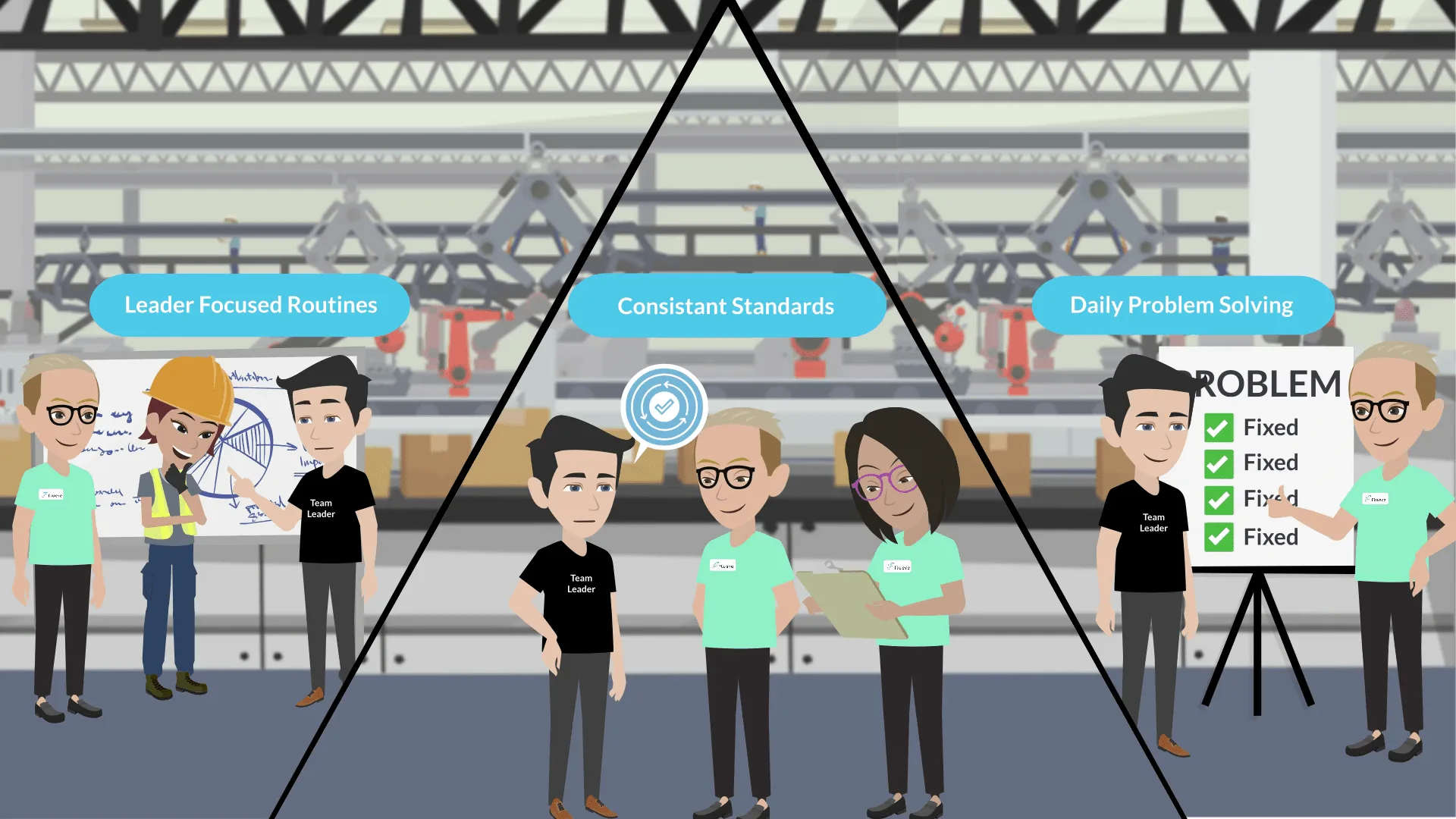
Simple routines and visual controls that make performance visible, create ownership, and accelerate issue response.
In practice
Walk away with
Next step
With control in place, the full framework comes together into a connected improvement system.
Together, the four stages adapt to the business, grow with capability, and deliver results that last.
See the operation clearly before changing it.
Turn insight into visible operational movement.
Build leaders and teams who can sustain improvement.
Make improvement stick and keep performance stable.