

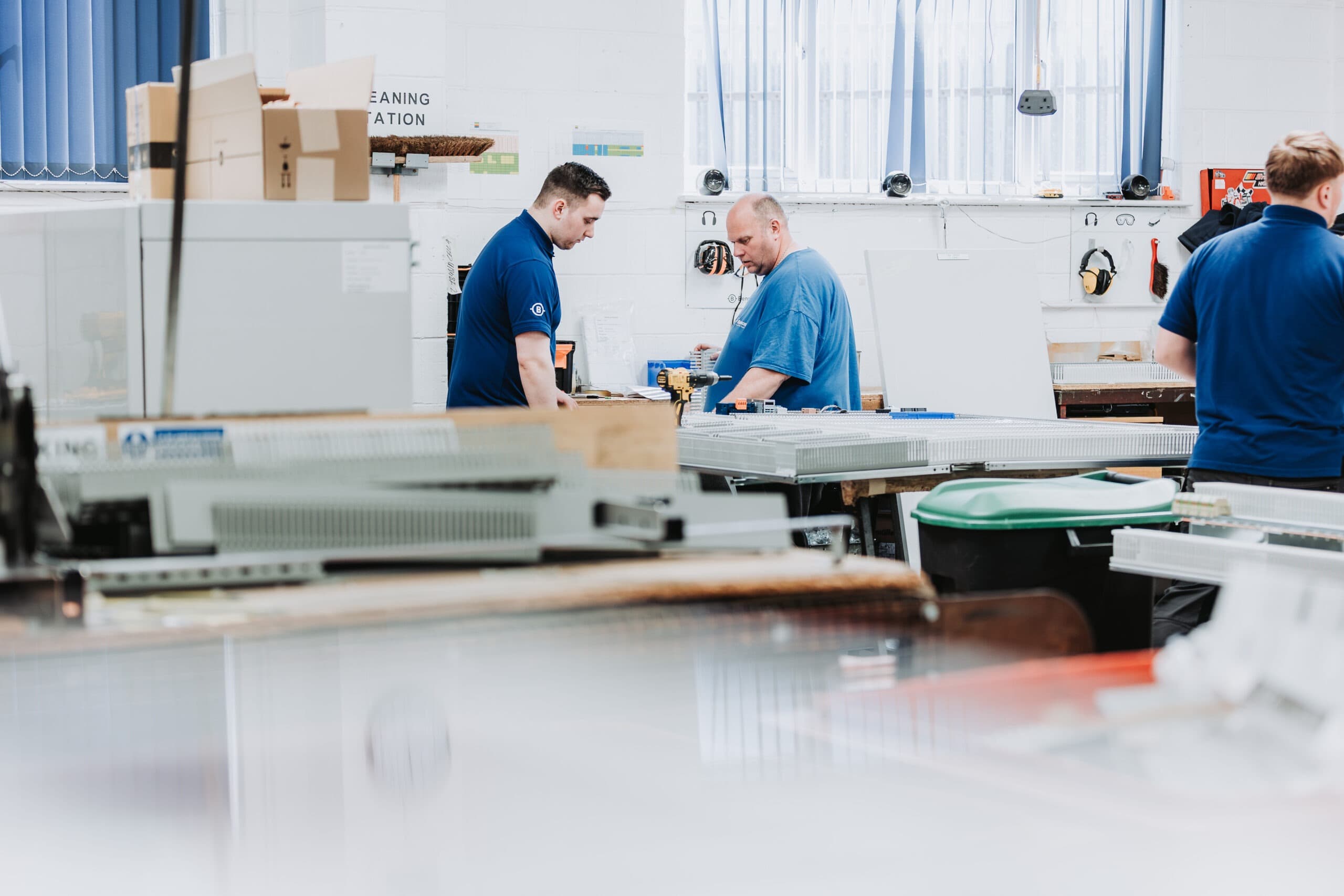
Practical signals that show where throughput is truly being limited rather than where the noise is loudest.
The loudest part of a factory is rarely the real bottleneck. The process that gets the most attention is often the one closest to the office, or the one with the most visible queue, rather than the one actually capping total output.
Genuine constraints tend to show consistent signals: work piling up immediately before a process and starving immediately after it, the area routinely working overtime while neighbouring areas wait, and on-time delivery problems that trace back to the same step no matter what else changes upstream.
Spotting the real constraint means looking at flow across the whole value stream rather than at any one station in isolation - tracking where queues consistently form, where changeovers eat into available time, and where capacity is most sensitive to small disruptions.
Once the true bottleneck is identified, the priority is protecting and maximising it: removing anything that interrupts it, feeding it reliably, and only then looking at improvements elsewhere. Improving a non-constraint rarely moves total output.